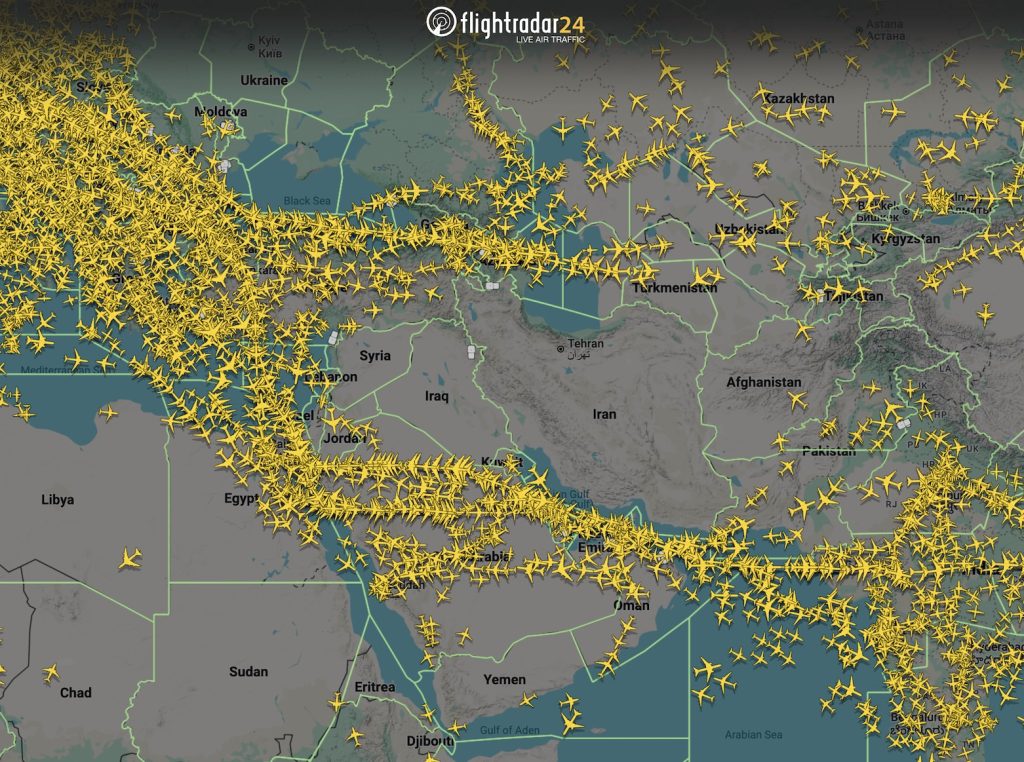
The Middle East has been at the center of global headlines in early 2026, following a major military escalation involving the United States, Israel, and Iran. Despite this heightened tension and disruptions in regional air travel, Jordan’s airspace remains open and safe for commercial flights, albeit with some adjustments in pricing and routing.
Jordan’s Airspace Status — Open and Operational
Unlike several neighboring countries that temporarily shut down or restricted their skies in response to conflict-related risks, Jordan’s civil aviation authorities have kept the airspace open for commercial operations. Royal Jordanian and other carriers continue to schedule flights normally, with safety monitoring in close coordination with international and local aviation authorities.
While some routes over the broader Middle East have experienced detours or cancellations due to regional risk, flight operations to and from Jordan have generally been maintained. Travelers may see slightly higher ticket prices as airlines adjust for longer flight paths or added fuel costs associated with avoiding certain air corridors.
Safety Conditions — Stable and Monitored
Jordan is known for its internal stability and effective security apparatus. Current information from travel safety reports indicates that daily life in Jordan remains calm, with no active military operations inside the country. Tourism infrastructure—hotels, sites like Petra and Wadi Rum, and airports—continues to function normally without major disruption.
In the context of the broader Middle East tensions, Jordan emphasizes protecting its citizens and visitors, and regularly updates safety protocols as necessary. While diplomatic warnings and regional alerts exist (prompted by nearby conflict zones), Jordan itself remains peaceful and secure.
Jordan’s Neutral Stance in Regional Conflict
Importantly, Jordan has repeatedly clarified that it is not a party to the ongoing conflict involving the United States, Israel, and Iran. According to high-level officials, the Kingdom does not intend to engage militarily on behalf of any side, and its airspace and territory are not being used as a launching ground for combat operations.
This position of responsible neutrality focuses on safeguarding national sovereignty and preventing escalation on Jordanian soil. Persistent efforts in diplomacy and defense coordination aim to reduce the impact of regional instability on Jordan’s population and economy, particularly its critical tourism sector.
What This Means for Travelers
For tourists, business travelers, or long-term visitors planning a trip to Jordan right now, here’s what to keep in mind:
- Air routes are active: Major airlines still fly to Amman and Aqaba, though you may notice small price increases due to reroutes or demand shifts.
- Safety is strong: Jordan remains one of the more stable destinations in its region, with everyday life largely unaffected by nearby conflicts.
- Stay informed: Although Jordan is peaceful, global advisories for parts of the Middle East may change. Always check airline updates and official travel advisories before departure.
Conclusion
Despite ongoing conflict elsewhere in the Middle East, Jordan’s skies are open and its roads and cities remain safe. With a policy of neutrality and a focus on internal security and hospitality, the Kingdom continues to welcome visitors—making it a resilient and reliable destination in uncertain times.


