
Israel
Basilica of the Annunciation, Nazareth – Largest Christian Church in the Middle East
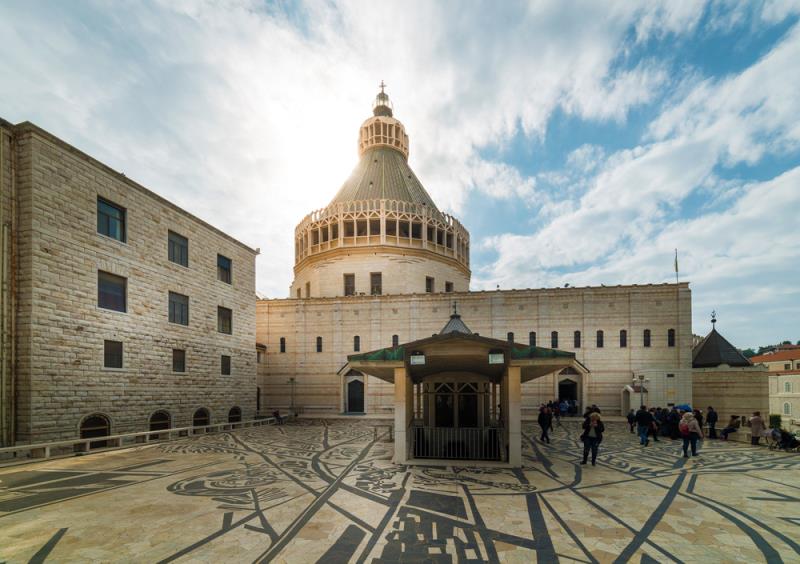
Located in the heart of Nazareth in the Lower Galilee, this is the largest Christian church in the Middle East. Built directly over the ancient cave (the Grotto) that tradition holds was the childhood home of the Virgin Mary—and where the angel Gabriel appeared to her—the current brutalist-style modern basilica was completed in 1969 and ingeniously preserves the ancient ruins on its lower level.
What Tourists Actually Search For (Tips & Hacks):
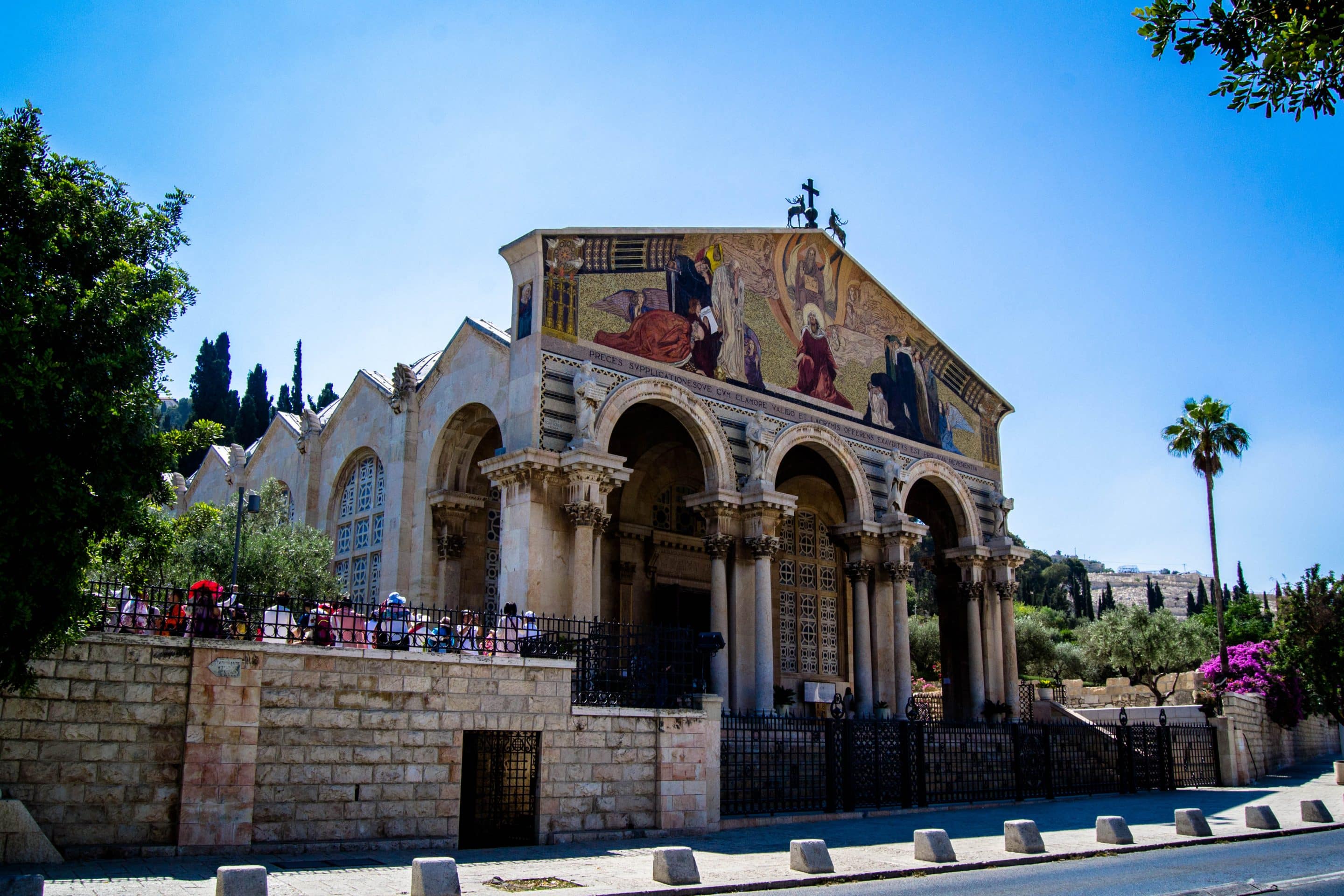
- The Global Mosaics Hunt: The most searched-for visual feature of the church isn't the ancient cave, but the courtyard and upper walls. Dozens of countries from around the world donated massive, unique mosaics of the Virgin Mary and Jesus, each reflecting their own national culture and artistic style (the Japanese, Thai, and American mosaics are huge search topics). Tourists love spending time hunting for their home country's contribution.
- The Two-Level Strategy: Travelers are often confused by the layout. The massive building is divided into an Upper Church (serving as the local parish and featuring the massive concrete dome) and a Lower Church (which is dark, quiet, and houses the actual sunken Grotto). The ultimate tip is to visit the Lower Church first thing in the morning for prayer or quiet reflection before the large bus tours arrive, and save the Upper Church for later.
- The Nazareth Parking Nightmare: Independent travelers driving rental cars heavily search for parking logistics. The streets of ancient Nazareth immediately surrounding the basilica are incredibly narrow, dizzyingly steep, and choked with heavy, chaotic traffic. The top hack is to abandon the idea of driving directly to the church gates; instead, park at one of the larger paid municipal lots down the hill on the main road (Paulus VI Street) and walk up.
- Strict Modesty Enforcement: Because this is one of the holiest Christian sites in the world, the dress code is fiercely enforced by guards at the front gate. Tourists frequently search for the rules after getting turned away. Both men and women must have their knees and shoulders completely covered. Carrying a lightweight scarf or a zip-up layer in your daypack is mandatory here, even in the brutal heat of the Israeli summer.
```
.jpg)

.jpg)


